
The Centre has argued before the Supreme Court that state governments cannot use writ jurisdiction to challenge the actions of the President and Governor regarding bills passed by state assemblies, particularly concerning fundamental rights violations. The President seeks the Supreme Court's opinion on whether states can file writ petitions under Article 32 and the scope of Article 361.
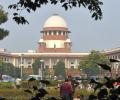
The Supreme Court is hearing arguments regarding a presidential reference on whether fixed timelines can be imposed on governors and the president for acting on bills passed by state legislatures. The court is considering objections to the maintainability of the reference under Article 143 of the Constitution.
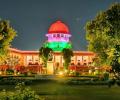
The Centre told the Supreme Court that governors are not indefinitely sitting on bills passed by state legislatures, and that barring a few exceptions, most have acted in a way which the apex court would have perhaps desired. Solicitor General Tushar Mehta argued that a Governor is "not a rubber stamp" and has a duty to preserve, protect, and defend the Constitution.

The National Sports Governance Bill was on Tuesday passed by the Parliament with Rajya Sabha giving its nod a mere 24 hours after Lok Sabha.

The Governor of a state cannot refer bills passed by the legislature and readopted by it for presidential assent, the Supreme Court ruled on Friday, and asked Tamil Nadu Governor R N Ravi to hold a meeting with Chief Minister M K Stalin in an effort to end the impasse over 10 such pending bills.

Khan said when any ordinance or Bill comes before him, he applies his mind to ascertain whether it is constitutionally and legally sound.

Salient features of the National Sports Governance Bill that promise to overhaul several aspects of sports governance and the grievance redressal system for athletes and administrators alike in the country.

The Delhi assembly which held 74 sittings over its five-year term, met for an average of 15 days a year. On the days it met, the assembly sat for an average of three hours.
A Constitution bench comprising Chief Justice B R Gavai and Justices Surya Kant, Vikram Nath, P S Narasimha and A S Chandurkar, would fix the timelines on July 29 and commence hearing on the presidential reference in mid-August.

President Droupadi Murmu has exercised powers under Article 143(1) used in rarity to know from the Supreme Court whether timelines could be imposed by judicial orders for exercise of discretion by President while dealing with the bills passed by state assemblies.
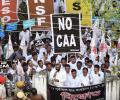
Delayed by more than four years, rules for the CAA are a must for its implementation.

The Centre on Thursday assured the Supreme Court that it will neither denotify Waqf properties, including "Waqf by user", nor make any appointments to the central Waqf council and boards till May 5.

The Supreme Court of India has agreed to hear on May 6 the pleas of the Kerala government against the governor over the delay in approving bills passed by the state assembly. The court will consider whether the issues raised in the Kerala petition are covered by a recent judgment on a similar plea by Tamil Nadu, which set timelines for governors and the President on granting assent to bills.
The passage of the bill will pave the way for setting up of a GST council that will decide the tax rate, cess and surcharges.

The economic reforms process has got a boost following the presidential assent to the Unit Trust of India (Transfer of Undertaking and Repeal) Bill, 2002 and Securities and Exchange Board of India (Amendment) Bill, 2002.\n\n\n\n
While India today is vastly different from the India of 1975, the need for vigilance against authoritarianism remains the same, asserts Utkarsh Mishra.

Prez assent to Gujarat labour law with contentious provisions.

The top court, meanwhile, permitted the state government to amend its plea to seek issuance of guidelines for the governors on grant or decline of assent to the bills passed by the assembly in a time-bound manner.

He said in categorical terms that CAA was brought in to provide citizenship and not to take away anyone's citizenship.
The Bharat Mata controversy in Kerala shows how political and symbolic fights between the state and the Centre have taken attention away from education, throwing the state's oldest university into confusion and disorder, observes Shyam G Menon.

While the permission has been granted from the Rajya Sabha till December 31, 2022, the Lok Sabha has granted the time till January 9, 2023.

The bill seeks to make any violation of prohibitory orders issued under Section 144 CrPC a cognisable offence under Indian Penal Code Section 188 (disobedience to an order duly promulgated by a public servant).
The rules for the CAA are likely to be issued before the MCC comes into effect, sources privy to the development said.

In a veiled attack on CM Shinde, Thackeray said the 'Kansa Mama', a reference to a character in Mahabharat, is busy getting rakhis tied on his wrists and asked when he will get justice for the nieces.
President Pratibha Patil has given her assent to the delimitation proposal, a Rashtrapati Bhavan spokesman said, amid indications from the Law Ministry that it would come into immediate effect in almost all parts of the country. This is except Meghalaya and Tripura, where the assembly poll process is already on, and therefore it would come into force from March 20. Also excluded are four north-eastern states-- Assam, Arunachal Pradesh, Manipur and Nagaland and Jharkhand
'We have been threatened. We have felt violated.' 'Everything is in danger if you don't give safe spaces to women.'
The Centre on Friday returned the controversial anti-terror Bill passed by Gujarat Assembly to the state, saying without three key amendments it could not be sent for Presidential assent.
The National Investigative Agency Bill and Unlawful Activities (Prevention) Amendment Bill on Tuesday became a law as President Pratibha Patil gave her assent to those legislations which were passed in the last session of Parliament."NIA will be established to investigate terrorist offences. As and when any case is assigned to the NIA, it will take up investigation," he said. Home Minister P Chidambaram told reporters that the presidential assent has been received today.
The three points on which clarifications are sought include widening of powers of special designated courts and that no court could grant anticipatory bail and a suggestion by the Centre for adding a new provision for compounding offences.
In a significant development, the Supreme Court on Friday agreed to consider the separate pleas of opposition-ruled Kerala and West Bengal, alleging the denial of assent to bills passed by the respective legislative assemblies.
The Bharatiya Janata Party-ruled Madhya Pradesh has brought in a stringent law against cow slaughter which has raised the jail term from the current three years to seven years for violators.
Under the NPS, every subscriber will have an individual pension account, which will be portable across job changes.
Political controversy broke out on Friday after the Centre decided to return the controversial anti-terror Bill sponsored by the Narendra Modi government in Gujarat, suggesting three changes without which, it said, it would not be sent for Presidential assent.
In the Upper House of Parliament, where the Lokpal Bill is likely to be taken up on Wednesday, the Congress does not have majority on its own or with its allies in the UPA.
T D Dogra, who heads Forensic Medicines and Toxicology Department and is next to Venugopal in seniority, was appointed AIIMS' acting chief.
Uttar Pradesh Chief Minister Mayawati on Wednesday decided to withdraw the state's plea for the enactment of the Uttar Pradesh Control of Organised Crime Act."Since such a law was already in existence in Maharashtra, we felt that it would be effective in Uttar Pradesh as well. But the Home ministry continued to put hurdles in our path and did not allow the bill to be cleared," she said.

With the CAA rules being issued, the Modi government will now start granting Indian nationality to persecuted non-Muslim migrants -- Hindus, Sikhs, Jains, Buddhists, Parsis and Christians -- from the three countries.
